Nowadays, the industries are experiencing a paradigm shift, in which speed, flexibility and efficiency aren’t optional, but are necessary. Traditional infrastructures are often slow and costly to change and struggles to meet the requirements of distributed operations and real-time insights. ScalerPi offers a new perspective on edge computing, combining it with practical engineering in order to deliver solutions which are truely scalable.
The Raspberry Pi is at the at the heart of this new revolution, allowing companies to reconsider their methods of building and managing systems. Instead of relying on centralized, bulky equipment, companies are now able to utilize lightweight and powerful devices that work directly in the place where data is generated. This reduces the amount of latency and gives teams the ability to react immediately to the changing environment.
Converting Data into Action at the Edge
The true benefit of edge computing is the capability to process data locally. In many industrial environments, it is not possible to sit and wait for cloud systems respond. ScalerPi offers an infrastructure that is not dependent, but can be integrated with other systems in the event of need.
The setup wouldn’t be complete without the industrial Raspberry Pi IoT gate, which is the central link between apps and devices. The gateway facilitates seamless communications between machines, sensors and software platforms. Data is sent securely and efficiently. This allows real-time monitoring of operations, prompt detection of issues, and consistent performance across different sites.
This capability can be transformative for industries such as environmental monitoring and logistics. This allows systems to operate even in remote locations or those that have poor connectivity, ensuring that data and operations can be accessible.
Compact Power for Demanding Environments
One of the greatest challenges in industrial computing is to balance efficiency with practicality. Although large servers can be powerful but they are expensive and consume a lot of energy and are not flexible enough. ScalerPi overcomes this with industrial Raspberry Pi servers that deliver efficient computing in a tiny, energy-efficient form.
These servers are built for use in real-world situations where space and power are at a minimum. They can be used in factories or a retail outlet or even a remote monitoring station, they offer consistent performance, without the requirement for a complex infrastructure. The modularity of their systems allows for gradual expansion making it possible for businesses to match growth with their current requirements.
Taking this a step further, the compact industrial Raspberry Pi compute module server offers even greater versatility. These servers, which are designed to withstand extreme conditions, come with toughness and superior processing capabilities. These servers are best suited for applications that require continuous operations like smart cities or industrial automation systems.
Containerized deployment provides flexibility
Modern infrastructure must be adaptable which is where containerization plays a key function. ScalerPi incorporates industrial Raspberry Pi docker environments to enable the flexibility and efficiency of application management. With Docker businesses can launch, update, and scale applications swiftly without interrupting their ongoing operations.
This makes development easier and ensures consistency across deployments. This lets applications be tested in one location and then seamlessly transferred to another. This decreases the chance of error and enhances overall reliability. This level of control, that is crucial for companies that have multiple locations is extremely beneficial.
Containerization is also a method to foster development. Teams are able to experiment and test new capabilities without having to alter existing systems.
Practical Solutions in a Variety of Industries
ScalerPi is a powerful tool since it is adaptable to a broad range of industries. For manufacturing industrial automation, Raspberry Pi enables predictive maintenance, helping reduce downtime and improve efficiency. Machines are able to communicate and share information, resulting in a more integrated and intelligent manufacturing environment.
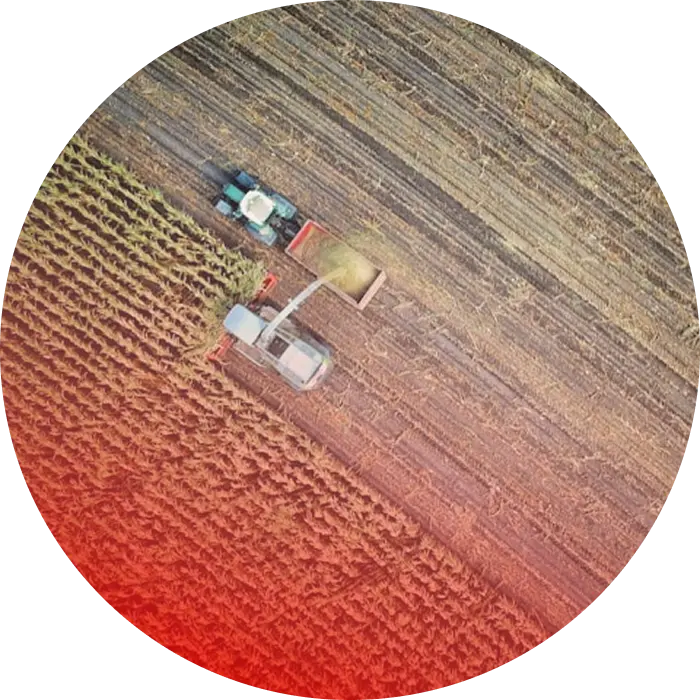
Edge technology in agriculture supports better farming practices. Sensors can track the conditions of soil, weather patterns and the health of crops, making it easier for farmers to make informed decisions that improve yields and conserve resources.
Hospitality and retail industries benefit from real-time insights into the behavior of customers. Companies can enhance the experience of their customers by enhancing their operations. This includes digital signage, as well as queue management. Edge infrastructure is utilized in public sector projects, such as smart cities for monitoring environmental issues and asset management.
Connecting Hardware and Cloud securely
What distinguishes ScalerPi is its ability to bridge the gap between physical devices and cloud-based systems. By combining hands-on hardware expertise and modern cloud technologies and a unified platform that can handle both local processing as well as central management.
This ensures that businesses can scale without complexity. The infrastructure can be managed, cost-effective and secure, whether you begin with a modest deployment, or expand to thousands of devices. Flexible pricing and transparent pricing aid in the process. The focus of organizations can be on innovation, rather than operating issues.
Industrial Technology for the Future
As the development of industries continues increasing the demand for a more efficient and flexible infrastructure will rise. ScalerPi offers a solution satisfy these requirements, by using the ability to be flexible of Raspberry pi technology with the power of Edge-computing.
Each component including industrial Raspberry Pi servers to advanced IoT gateways and containerized applications is designed to ensure scalability and usability. The system is built to not just support today’s requirements, but prepare businesses for future challenges.